

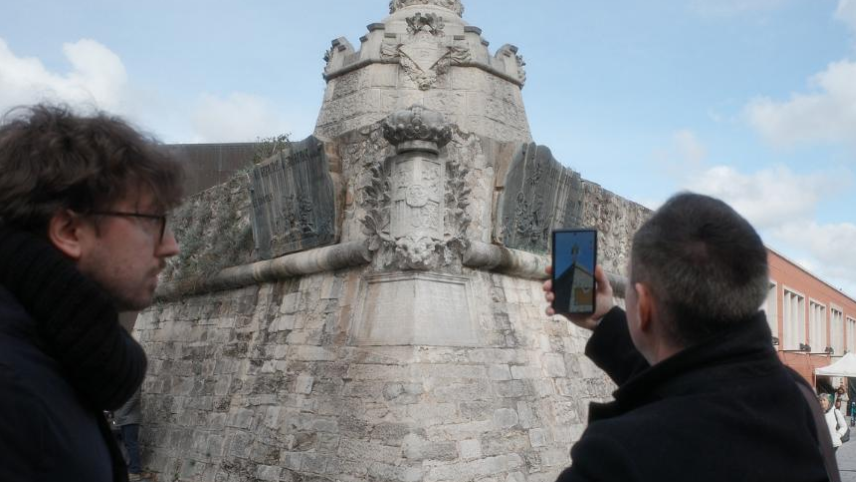
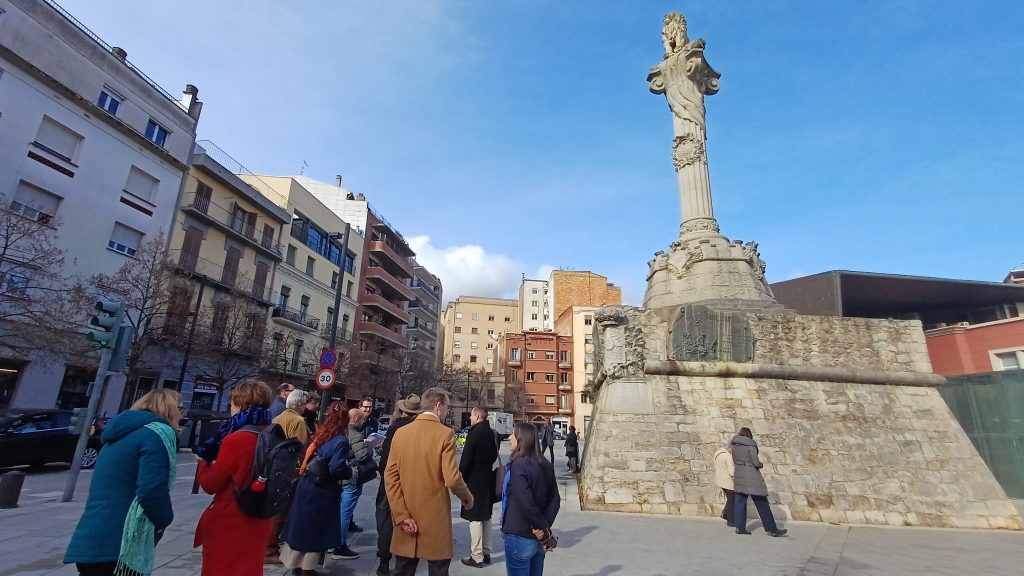
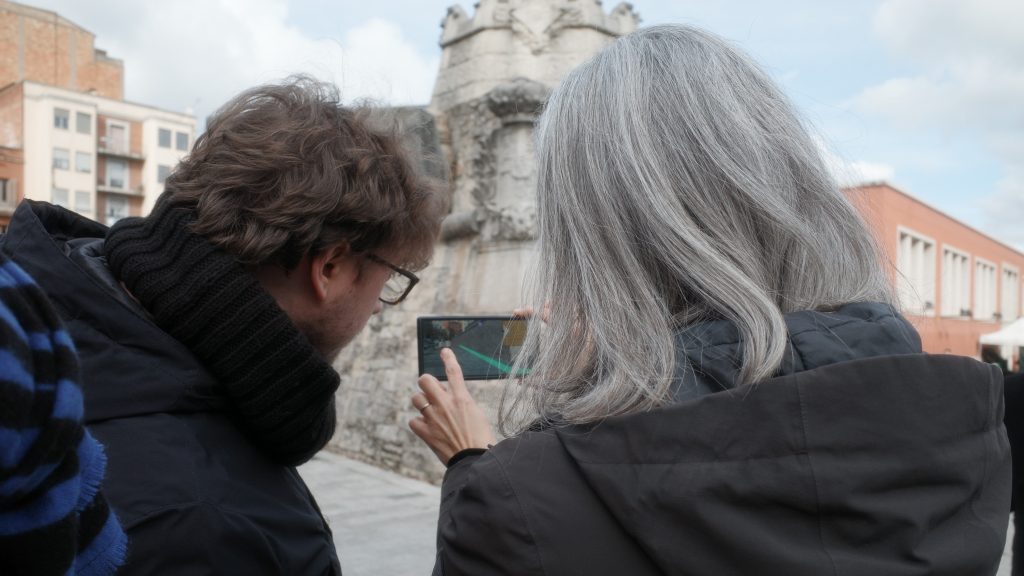
The Girona pilot (led by CRDI) is about using archival materials to reconstruct in 3D the medieval walls of the city of Girona (Catalonia, Spain), in order for users to be able to see the 3D models of the walls, towers and bastions on-site, right where they used to be before they were demolished. Such digital reconstructions were also reused for the creation of an AR walking tour, accessible to from a mobile device, targeted at citizens, tourists, cultural visitors, educators, students, and cultural event organisers.
The walls of Girona were first built in the Roman times and were later altered during the Middle Ages. After the sieges of the French War (1808-1809), the last war event in which the walls had been an essential element of the defence, the walls were heavily damaged and became completely obsolete: seen as an obstacle to urban growth, they were partly demolished at the beginning of the 20th century, preventing any possibility of archaeological restoration.
In the EUreka3D-XR project, 3D modelling and XR let us go back in time and recover what was destroyed: based on extensive materials such as cartography, engravings, photography, films and textual records, we are now able to visualise the walls again with a very realistic approach. Find below the 3D reconstruction of the Bastion, the Wall and the Tower (please allow a few seconds for the content to load):
By using the AI 3D Builder tool, developed by project partner Swing:It, it will be possible to create very realistic 3D models of the demolished walls through an advanced AI-powered software pipeline to generate 3D models from 2D image collections. Additionally, the 3D XR Studio tool (both web-based and a mobile application, all developed by Swing:It) was developed to allow users to have an XR experience on site.