
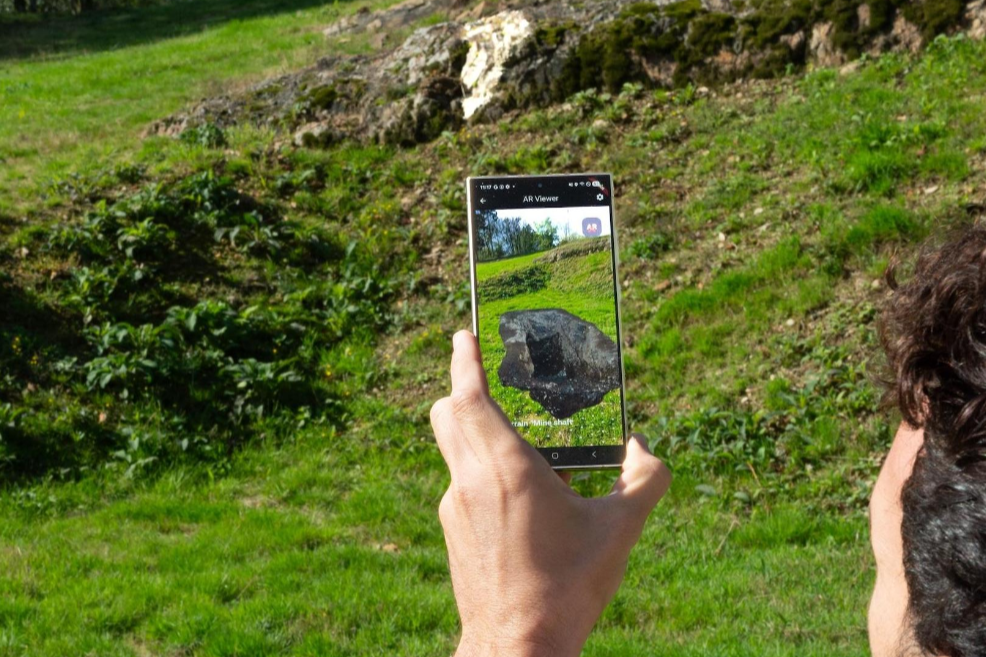
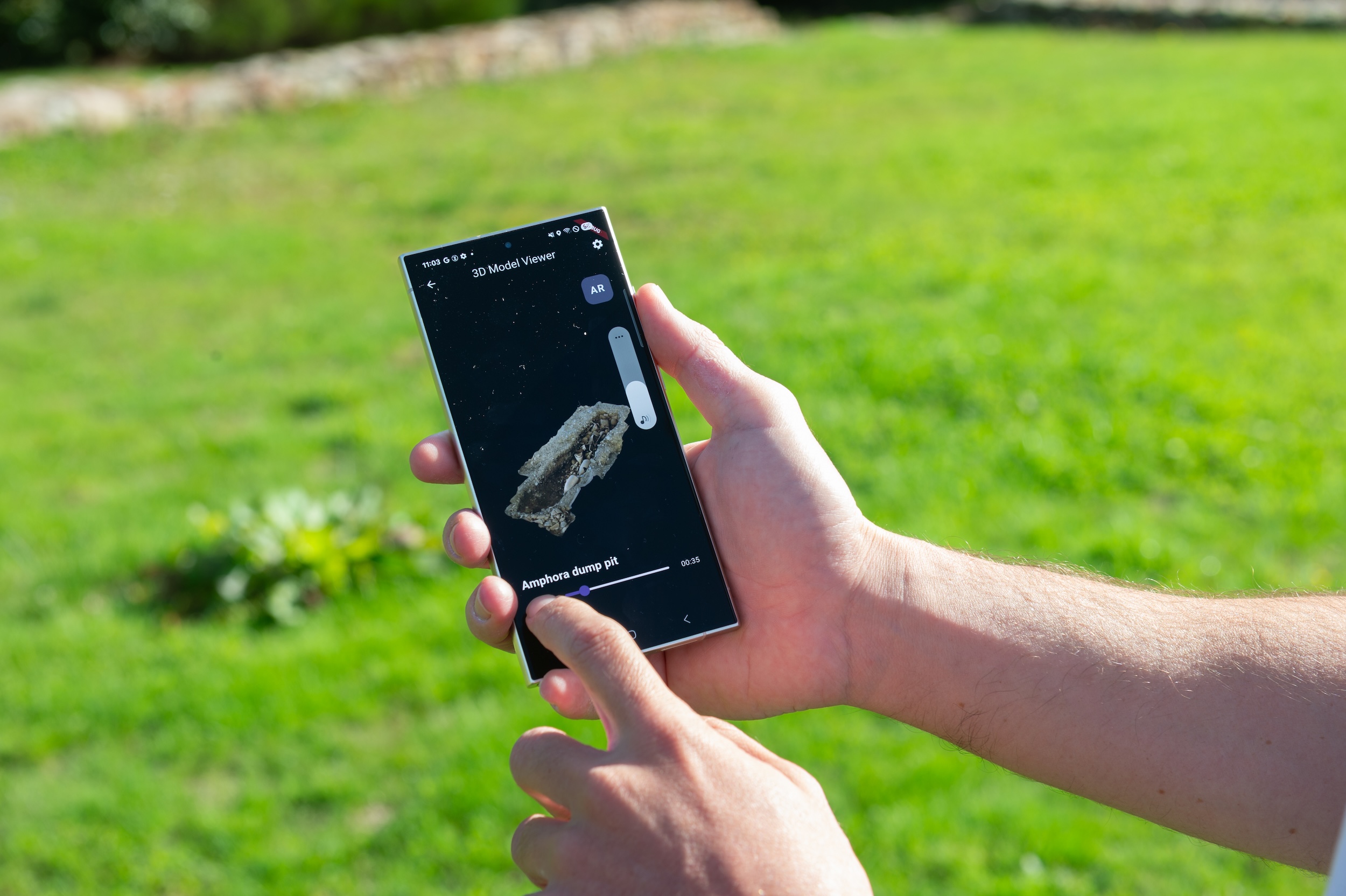
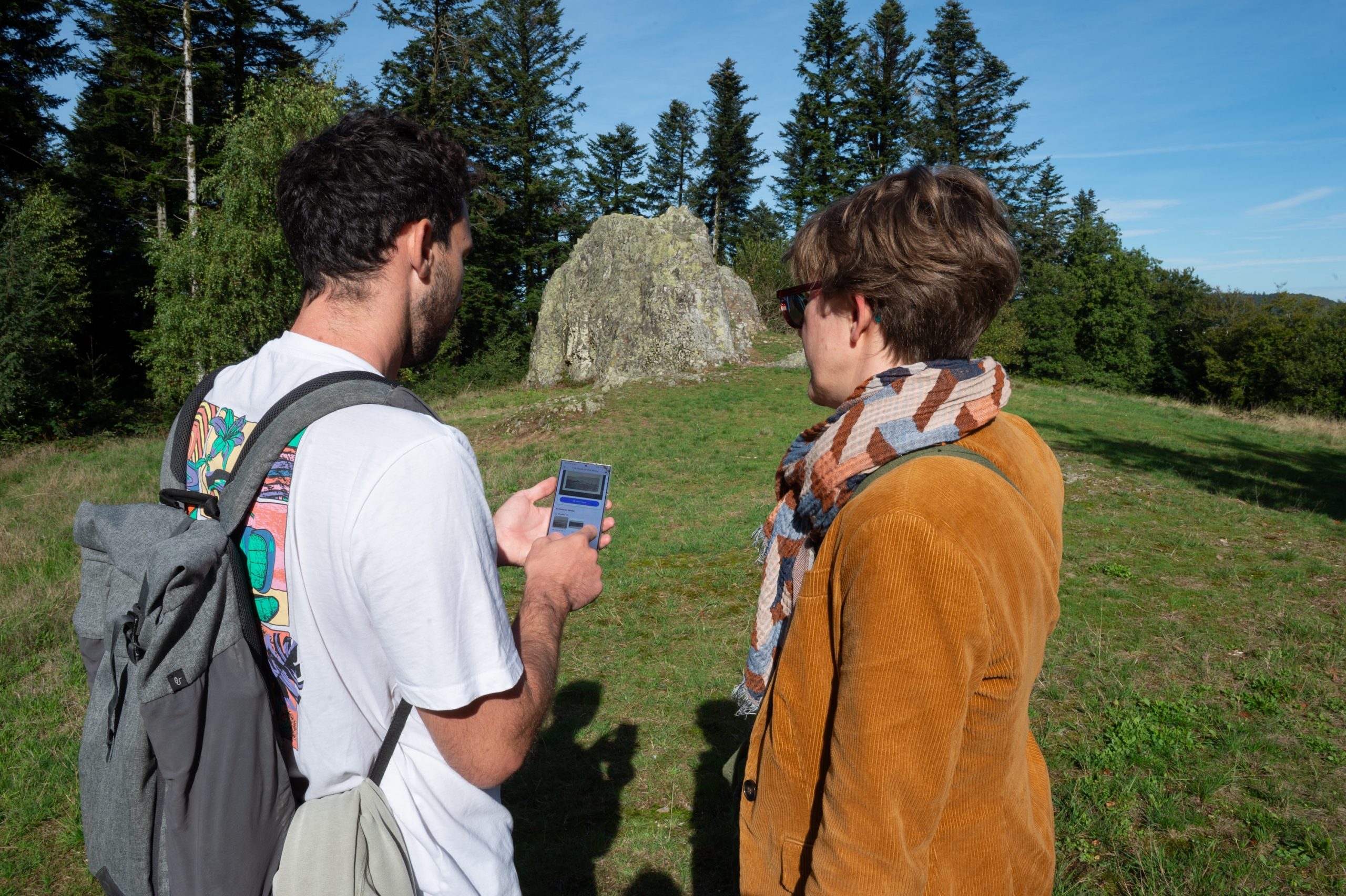
The Bibracte pilot (led by Bibracte EPCC) is about visiting the archaeological site of the Celtic city of Bibracte (France) and being able to understand the process of excavations, the reconstructed aspect of buildings and the artefacts that were retrieved by archaeologists in different zones of the site, by following a map available on a mobile app.
Perched on Mont Beuvray in Burgundy, France, Bibracte was one of the largest Celtic towns of the Late Iron Age. It was mainly made up, until the mid-1st century BC, of wooden buildings, of which only limited archaeological traces are visible today, such as post holes, circulation levels, hearths, etc.: most of its history now lies hidden beneath today’s woodland.
Until now, the interpretation of the Bibracte archaeological site has relied mainly on displays in the museum’s permanent exhibition, including life-size reconstructions and illustrative material, as well as information panels at selected locations on the site. However, many archaeological remains are difficult to understand or no longer visible on the ground, while artefacts have been moved to the museum. One of the main challenges of on-site interpretation is therefore to help visitors perceive and understand these archaeological realities where they were discovered. The scenario developed as part of EUreka3D-XR, ‘The Hidden Side of Bibracte’, addresses this challenge through a geolocated augmented reality tour. 3D models of remains, reconstructions and artefacts are displayed in AR on site and complemented by additional content providing archaeological context. Discover below three 3D models used in the experience (please allow a few seconds for the content to load):
Additionally, the tools created within the project (developed by project’s partner NTUA), AR Tour Builder and AR Tour Experience, enabled the creation of a geolocated tour accessible via a mobile app. Through augmented reality, visitors can visualise 3D models positioned in their archaeological context and enriched with complementary media directly on site. The visit developed in the context of the project allows them to discover ‘the hidden side of Bibracte’ by having access to missing elements, not visible in situ or not directly accessible to the senses and intellect.
FURTHER READINGS